

Table of Contents
- Why Pet Supplies Cost So Much (And How to Fix It)
- Build Your Essential Pet Supplies Checklist
- Bulk Buying Pet Supplies: When It Saves Money and When It Doesn't
- Pet Care Budget Tips: Track, Plan, and Adjust
- Shop Online Discount Retailers Before Paying Full Price
- Compare Generic vs. Name-Brand Pet Products
- DIY Pet Supplies and Second-Hand Safety Guidelines
- Conclusion: Small Changes Add Up to Big Savings
- Frequently Asked Questions
Last Updated: October 4, 2026
Why Pet Supplies Cost So Much (And How to Fix It)
Pet food, litter, toys, and vet basics add up fast. The fix is not buying less for your pet. It is buying smarter. This guide from The Frugaling Shop shows you how to save money on pet supplies with seven practical strategies you can use this week.
It's easy to overspend in three places: full-retail pet store runs, last-minute emergency buys, and brand loyalty that costs more than it returns. Change those habits and you can lower your monthly pet spending without cutting back on what your pet actually needs.
Below, we break down each strategy step by step, from building an essentials checklist to shopping discount retailers before you pay full price. Small changes stack up. Let's start with the biggest one.
Build Your Essential Pet Supplies Checklist
Start with a checklist. It stops impulse buys and duplicate purchases. A good checklist separates what your pet truly needs from what is just fun to buy.
Start by separating routine essentials from extras you can wait to buy when the price is right. Write your list in two columns before you shop.
Must-Have Items vs. Nice-to-Have Extras
Must-haves cover health and daily care:
- Food and treats that match your pet's life stage
- Water and food bowls
- Litter or waste bags
- A leash, collar, and ID tag
- Basic grooming tools
- Flea, tick, and heartworm prevention
Nice-to-haves can wait for a sale:
- Extra toys and chew items
- Seasonal outfits
- Fancy beds and furniture
- Treats beyond training needs
Bulk Buying Pet Supplies: When It Saves Money and When It Doesn't
Bulk buying pet supplies saves money when the item does not expire, your pet will finish it, and you have room to store it. It costs more when food goes stale or your pet rejects a new brand.
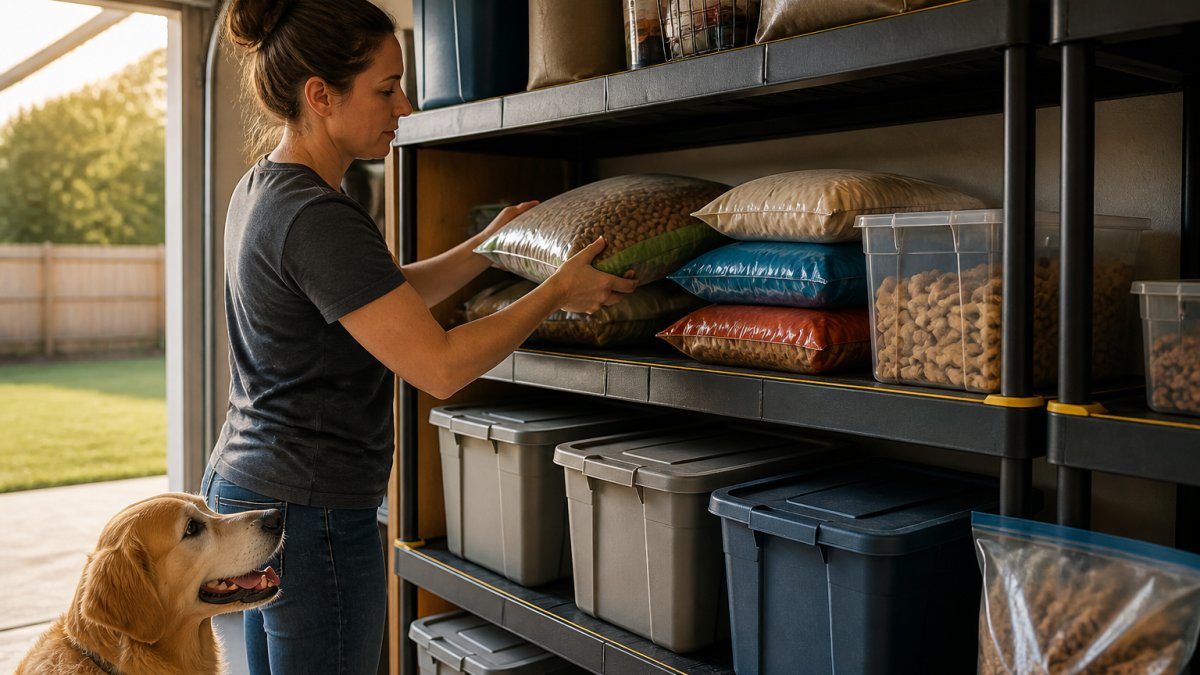
Bulk buying works best for:
- Dry food your pet already eats
- Litter and waste bags
- Treats with a long shelf life
- Cleaning and grooming supplies
Skip bulk buying for:
- Large quantities of any food your pet hasn't tried
- Medications or preventive products you may not use before they expire
- Anything your pet has never tried
Storage Tips for Stockpiled Food and Treats
Store dry food according to the manufacturer's instructions and keep it cool and dry. If you use storage bins, keep track of the original packaging, lot information, and expiration date.
Pet Care Budget Tips: Track, Plan, and Adjust
Track what you spend for one month. It's easy to underestimate how much you're spending. Write down every pet purchase, from food to vet visits.
Then build a simple monthly pet budget:
Premier Pet 300 Yard Remote Trainer: Corrects Unwanted Behaviors for All Size →
- Set a total pet spending limit
- Split it into food, care, and fun
- Review it each month
- Move unused money to an emergency pet fund
Adjust as seasons change. Flea season, holidays, and vet checkups cost more. Routine veterinary and routine preventive care guidance from the AVMA are expenses worth planning for rather than treating as unexpected costs.
Shop Online Discount Retailers Before Paying Full Price
Online discount retailers can offer significant savings on pet supplies, especially closeout, overstock, and open-box merchandise. Compare prices before you buy.
At The Frugaling Shop, we carry a constantly changing mix of pet products at prices below traditional retail. Inventory moves fast, so check back often. Our free U.S. shipping on $50+ orders helps bulk buys make sense. For example, you can find items like the Premier Pet 300 Yard Remote Trainer for $19.97, the Premier Pet In-Ground Fence for Dogs for $39.57, the A&E Two-Story Hamster Cage for $14.97, and Project Watson Eye Wash For Dogs for $5.97, all listed as Open Box - Like New for additional savings. Because our inventory changes frequently, check out our latest pet products and new arrivals to see what frugal finds are available now.

Before you pay full retail anywhere, check discount sellers first. It takes two minutes and often saves real money.
Compare Generic vs. Name-Brand Pet Products
Generic and store-brand pet products aren't automatically a worse value than name brands. In many everyday categories, comparing ingredients, materials, features, and price can uncover less-expensive alternatives that work just as well for your needs.
Where Generic Options Are Worth Comparing
- Treats and chews. Ingredient lists are short and easy to compare side by side.
- Bowls, litter boxes, and basic gear. Stainless steel is stainless steel. A generic bowl does the same job as a branded one.
- Waste bags and litter. Performance differences are minor for most households.
- Shampoo and basic grooming tools. Look for the same active ingredients and a pet-safe label.
Where You Should Compare More Carefully
- Prescription diets. These are formulated for specific medical conditions and are not interchangeable with over-the-counter food.
- Vet-recommended preventive care products, when appropriate for your pet
- Joint, dental, and specialty chews. Quality control varies more in this space.
How to Compare Two Products in Under a Minute
- Flip to the guaranteed analysis or ingredient panel. For pet food, compare the nutritional information, ingredient list, feeding guidance, and whether the product is appropriate for your pet's species and life stage.
- Check the AAFCO nutritional adequacy statement. A food labeled "complete and balanced" for your pet's life stage meets a defined nutrient profile (the FDA). A food labeled "for intermittent or supplemental feeding" is not a meal replacement.
- Calculate price per unit, not price per bag. Divide the total price by the number of ounces, pounds, or doses. A larger bag is not always the better value if the food goes stale before your pet finishes it.
- Read the return policy before you commit. Generics are only a good deal if your pet will actually eat or use them.
A Note on Pet Medication
Never swap a prescribed medication for an over-the-counter alternative without asking your vet. Some drugs require a prescription because dosing, interactions, or species-specific risks matter. The FDA's guidance on pet medication safety is a good starting point if you want to understand why. For everyday supplies like bowls, beds, and toys, generics are usually a straightforward win.
DIY Pet Supplies and Second-Hand Safety Guidelines
DIY pet supplies and second-hand gear can cut costs significantly, but they carry risks that new retail products do not. A used crate with a bent latch or a homemade toy with the wrong materials can hurt your pet. This section covers what is genuinely safe, what to inspect before you buy, and how to clean second-hand items so they are actually pet-safe.
DIY Projects That Are Worth the Effort
- Simple enrichment activities. Household items can sometimes be repurposed for supervised play or enrichment, provided they don't contain small, sharp, toxic, or easily swallowed parts.
- Pet beds. Old blankets, towels, or a folded duvet cover inside a washable pillowcase make a fine bed. Avoid foam that crumbles.
- Puzzle feeders. A muffin tin with treats under tennis balls is a classic, free enrichment toy with Supervision.
DIY Projects to Skip
- Homemade edible chews or anything involving cooked bones or foods that haven't been confirmed as safe for your pet.
- Homemade flea or tick treatments. Essential-oil recipes circulating online can be toxic to cats and small dogs.
- Homemade pet food without veterinary guidance. Getting the nutrient balance wrong causes real harm over time.
What Is Safe to Buy Second-Hand
- Crates and carriers. Inspect the door latch, hinges, and welds. A crate that pops open in a car is a hazard.
- Stainless steel bowls. These sanitize well and do not hold odors.
- Leashes and collars in excellent condition. Carefully inspect stitching, buckles, hardware, and D-rings, and skip anything showing wear, fraying, rust, or damage.
- Hard plastic items without deep scratches. Litter boxes and carriers fall here.
Second-Hand Items to Avoid
- Chew toys with cracks or missing pieces. They can break off and become a choking hazard.
- Old food, treats, or medication. Expiration dates matter, and storage conditions are unknown.
- Soft or fabric items with mold, mildew, or pest damage. These are hard to fully clean.
- Anything with a strong chemical or smoke odor. Odors absorb into porous materials and can irritate your pet's respiratory system.
How to Sanitize Second-Hand Gear
Clean second-hand items thoroughly according to the manufacturer's care instructions before your pet uses them. Wash washable fabrics appropriately and thoroughly clean hard, non-porous surfaces. Skip items that can't be adequately cleaned or that show deep scratches, mold, mildew, pest damage, strong odors, or structural wear. When in doubt, buying new is the better bargain.
Conclusion: Small Changes Add Up to Big Savings
Saving on pet supplies is not about cutting corners. It is about buying the right items, at the right time, for less. Build a checklist, buy in bulk when it makes sense, track your budget, and compare before you pay full retail.
At The Frugaling Shop, we make it easier to stretch your budget with a constantly changing assortment of pet products and other everyday finds. Join our free Frugaling Rewards program to earn points on every order, and check out what's available before paying full retail somewhere else.
Shop Frugal. Bank Loyalty.
Frequently Asked Questions
Is it cheaper to buy pet supplies in bulk or individually?
Bulk buying can lower the per-unit cost on items your pet regularly uses, such as dry food, treats, litter, and waste bags. But it only saves money if you'll use everything before it expires or goes stale. For new foods, toys, grooming products, or anything your pet may not like, buying a smaller quantity first can prevent waste. A good rule: bulk-buy products you already use consistently and compare the unit price before stocking up.
What should I look for when comparing prices on pet essentials?
Compare the unit price, not just the sticker price. A larger package may cost more upfront but less per ounce, pound, or unit. Also consider shipping costs, free-shipping thresholds, loyalty rewards, and the retailer's return policy. Comparing two or three sources usually makes it easier to see which option offers the best overall value.
How can I build a pet supply stockpile on a budget?
Start by tracking how much your pet actually uses each month. When a frequently used, non-perishable item goes on sale, consider buying an extra one if it fits your budget and you'll use it before it expires. Focus on products you already know your pet uses and store them according to the manufacturer's instructions. Over time, a small supply of regularly used essentials can help you avoid last-minute purchases at full retail price.
Are there reliable ways to save on recurring pet medication costs?
Ask your veterinarian whether lower-cost or generic options are appropriate for your pet's prescription. You can also compare prices among licensed, reputable pharmacies and ask whether larger quantities or recurring-delivery programs offer savings. Never change medications, doses, or preventive treatments based on price alone. Your veterinarian can help you determine which alternatives are appropriate for your pet.